Active Gelatin Films Containing Pumpkin Seed Oil and Rosemary Essential Oil for Extending the Shelf Life of Refrigerated Sardine Fillets
Keywords:
Pumpkin seed oil, rosemary essential oil, edible films, microbiological quality, refrigerated storage.Abstract
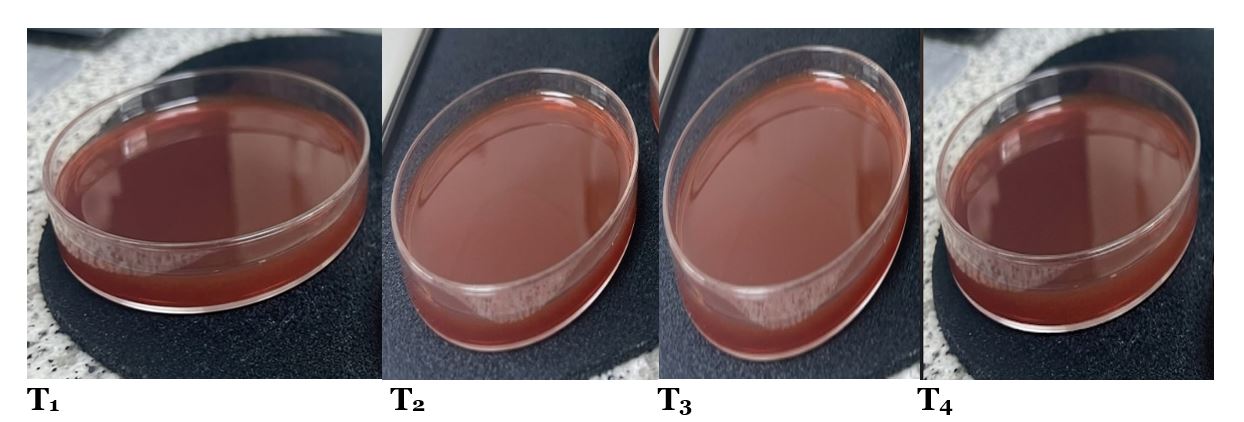
This study evaluated the effectiveness of gelatin-based edible films enriched with pumpkin seed oil and rosemary essential oil in preserving the quality and extending the refrigerated shelf life of sardine (Sardina pilchardus) fillets. Biodegradable films were prepared using gelatin plasticized with polyvinyl alcohol and glycerol, while bile acids extracted from chicken gallbladders were employed as a natural emulsifying agent to improve the incorporation and stability of the oils within the film matrix. Sardine fillets were assigned to uncoated (control) and coated treatments and stored at 4 ± 1°C for 15 days. The preservative efficacy of the developed films was assessed by monitoring physicochemical parameters, including pH, free fatty acids (FFA), peroxide value (PV), and thiobarbituric acid (TBA), together with microbiological quality indicators during refrigerated storage. All samples exhibited progressive increases in pH, lipid oxidation indices, and microbial counts throughout storage. However, fillets coated with the developed edible films showed significantly lower (p < 0.05) levels of chemical deterioration and microbial growth compared with the uncoated control. The films effectively limited oxygen and moisture transfer, thereby retarding oxidative reactions and inhibiting microbial proliferation. Among the tested formulations, rosemary essential oil-enriched films demonstrated the highest preservation efficacy, which can be attributed to the potent antioxidant and antimicrobial activities of their phenolic constituents. Moreover, coliform bacteria were not detected in any treatment during storage, indicating satisfactory hygienic handling and storage conditions. The findings suggest that gelatin-based edible films incorporated with rosemary essential oil or pumpkin seed oil constitute sustainable and eco-friendly active packaging systems with considerable potential to enhance the quality, safety, and refrigerated shelf life of fish products.
Metrics
References
Ahmad, M.; Benjakul, S.; Prodpran, T. and Agustini, T. W. (2012). Physico-mechanical and antimicrobial properties of gelatin film from the skin of unicorn leatherjacket incorporated with essential oils. Food Hydrocolloids, 28 (1): 189-199. https://doi.org/10.1016/j.foodhyd.2011.12.003
Akhter, R.; Masoodi, F. A. and Wani, T. A. (2024). Chitosan, gelatin and pectin based bionanocomposite films with rosemary essential oil as an active ingredient for future foods. International Journal of Biological Macromolecules, 275, 132813.10.1016/j.ijbiomac.2024.132813
Alansari, B. M. (2020). Development of antioxidant edible films incorporated with rosemary oil for meat preservation. Basrah Journal of Agricultural Sciences, 33(2):67–79. https://doi.org/10.37077/25200860.2020.33.2.06
Al-Husseini, K. S. J. (2019). Technology and Chemistry of Lipids. Dar Al-Atroha for Scientific Publishing (Iraq - Baghdad). Deposit number at the National Library and Archives in Baghdad 1769. 190 p.
Andrews, W. (1992). Manual of food quality control. Microbiological Analysis. FAO Food and Nutrition paper, No.14/4(Rev.1), Rome,Italy: 347 p.
Antonino, C.; Difonzo, G. and Caponio, F. (2023). Effect of edible coatings and films enriched with plant extracts and essential oils on the preservation of animal-derived foods. Journal of Food Science, 89 (2): 748-772.
Aoua, C.; Yacoubi, B. and Zekhnini, A. (2024). Effect of fishing season and size on the physicochemical and microbiological characteristics of salted sardines (Sardina pilchardus). International Journal of Food Science; 2024:7p. https://doi.org/10.1155/2024/9376432
APHA (2012). Compendium of methods for the microbiological examination of foods (3rd ed.),American Public Health Association. Edwards Brothers, Washington, D. C.
Athanasopoulou, E.; Bigi, F.; Maurizzi, E.; Karellou, E. I. E.; Pappas, C. S.; Quartieri, A. and Tsironi, T. (2024). Synthesis and characterization of polysaccharide and protein based edible films and application as packaging materials for fresh fish fillets. Scientific Reports; 14:517.
Bligh, E. G. and Dyer, W. J. (1959). Arapid method of total Lipid extraction and purification. Can. J. Biochem. Pysiol. 37:911.
Domínguez, R.; Pateiro, M.; Gagaoua, M.; Barba, F. J.; Zhang, W. and Lorenz, J. M. (2019). A Comprehensive review on lipid oxidation in meat and meat products. Antioxidants, 8, 429: 1-31.
El-Nemr, K. F.; Mohamed, H. R; Ali, M. A.;Fathy, R. M. and Dhmees, A. S. (2020). Polyvinyl alcohol/gelatin irradiated blends filled by lignin as green filler for antimicrobial packaging materials. International Journal of Environmental Analytical Chemistry, 100 (14):1578-1602.
Figueroa-Enríquez, C.E.; Rodríguez-Félix, F.; Ruiz-Cruz, S.; Castro-Enriquez, D.D.; Gonzalez-Rios, H.; Perez-Alvarez, J. A.; Tapia-Hernández, J. A.; Madera-Santana, T. J.; Montaño-Grijalva, E. A. and López-Peñ, I. Y. (2024). Application of active packaging films for extending the shelf life of red meats: A Review. Processes, 12(10):2115.
Gedi, M. A. (2022). Chapter 14 - Pumpkin seed oil components and biological activities. Multiple Biological Activities of Unconventional Seed Oils; 171- 184. https://doi.org/10.1016/B978-0-12-824135-6.00030-1
GenStat Release (2011). GenStat procedure library release PL20.1. GenStat 12th ed.
Hamid, G. A. K.(2020). Preparation of uncommon products made from silver carp (Hypopthalmichthys molitrix) and a study of the effect of refrigeration and freezing preservation on their qualitative properties. Master's thesis, College of Agriculture - University of Basra. 199 pp.
Hu, Z.; Hu, C.; Li, Y.; Jiang, Q.; Li, Q. and Fang, C. (2024) . Pumpkin seed oil: a comprehensive review of extraction methods, nutritional constituents, and health benefits. Journal of the Science of Food and Agriculture, 104 (2):572–582. https://doi.org/10.1002/jsfa.12952
Jay, J. M., Loessner, M. J. and Golden, D. A. (2005). Modern Food Microbiology (7th ed.). Springer.
Kang, J.; Kim, B. K. and Yoon, Y. (2026). Meat spoilage by bacteria: Influencing factors, volatile compounds, and organoleptic alterations. Food Science of Animal Resources; 46(1):42.
Kloy, A.; Ahmad, J.; Yusuf, U. and Muhammad. M. (2020). Antibacterial properties of rosemary (Rosmarinus Officinalis). South Asian Research Journal of Pharmaceutical Sciences; 2 (1): 7 p. 10.36346/sarjps.2020.v02i01.002
Kumar, L.; Ramakanth, D.; Akhila, K. and Gaikwad, K. K. (2021). Edible films and coatings for food packaging applications: A review. Environmental Chemistry Letters,: 1-26
Liu, C.; Huang, J.; Zheng, X.; Liu, S.; Lu, K.; Tang, K. and Liu, J. (2020). Heat sealable soluble soybean polysaccharide/gelatin blend edible films for food packaging applications. Food Packaging and Shelf Life .147 : 1076 – 1088.
Liu, Q.; Han, J. C.; Zhang, Y. G.; Li, S. M. and Li, J. (2012). Antimicrobial and antioxidant activities of carboxymethyl cellulose edible films incorporated with rosemary extracts on fresh beef during refrigerated storage. Advanced Materials Research; (554-556):1187 – 1194.
Luo, Q.; Hossen, M. A.; Zeng, Y.; Dai, J.; Li, S.; Qin, W. and Liu,Y. (2022). Gelatin-based composite films and their application in food packaging: A review. Journal of Food Engineering; 313, 110762. 10.1016/j.jfoodeng.2021.110762
Ma, Y.; Li, W.; Tan, S. and Yu, Q. (2024).Characterization and application of citrus pectin composite film containing rosemary (Rosmarinus officinalis L.) essential oil for improving storage of chilled beef. Journal of Food and Agriculture.105 (4): 2390-2402. https://doi.org/10.1002/jsfa.14009
Mariño-Cortegoso, S.; Lestido-Cardama, A.; Raquel Sendón, R.; de Quirós, A. R. B. and Barbosa-Pereira, L. (2025). The state of the art and innovations in active and edible coatings and films for functional food applications. Polymers;17 (18): 1-57.https://doi.org/10.3390/polym17182472
Mostafa, M. S.; Tushar, Z. H.; Abul Hashem, M. and Rahman, M. M. (2025). Role of natural antioxidants on active packaging of meat and meat products: A review. Applied Food Research, 101437.
Nie, X.; Zuo, Z.; Zhang, R.; Luo, S.; Chi, Y.; Yuan, X.; Song, C. and others. (2025). New advances in biological preservation technology for aquatic products. npj Science of Food, 9, 15.
Nieto, G.; Ros, G. and Castillo, J. (2018). Antioxidant and antimicrobial properties of rosemary (Rosmarinus officinalis): A review. Medicines, 5 (3):98. https://doi.org/10.3390/medicines5030098
O’sullivan, C. M.; Lynch, A. M.; Lynch, P. B.; Buckley, D. J. and Kerry, J. P. (2004). Assessment of the antioxidant potential of food ingredients in fresh, previously frozen and cooked chicken patties. International Journal of Poultry Sciences, 3 (5) :337-344.
Orkusz, A.; Rampanti, G.; Michalczuk, M.; Orkusz, M. and Foligni, R. (2024). Impact of refrigerated storage on microbial growth, color stability, and pH of turkey thigh muscles. Microorganisms, 12(6):114.
Pagey, S. V.; Landge, B. P. and Nakhale, S. (2025). Lipid oxidation in food systems: Mechanisms, detection methods, and prevention strategies. International Journal of Applied Research; 11(5): 82-88.
Pearson, D. (1976). Application of chemical methods for the assessment of beef quality. II. Methods related to protein breakdown. Journal of the Science of Food and Agriculture,19 (7):366-369.
Rajkumar, V. and Dwivedi, D. K. (2011). Antioxidants effect of curry leaf (Murraya koenigii) powder on quality of ground and cooed goat meat. International Food Research Journal,18: 563-569.
Rašković, A.; Milanović, I.; Pavlović, N.; Ćebović,T.; Vukmirović, S. and Mikov, M. (2014). Antioxidant activity of rosemary (Rosmarinus officinalis L.) essential oil and its hepatoprotective potential. BMC Complementary and Alternative Medicine 14(1), 225. http://www.biomedcentral.com/1472-6882/14/225
Rohman, A.F. and Irnawati, I. (2020). Pumpkin (Cucurbita maxima) seed oil: chemical composition, antioxidant activities and its authentication analysis, Food Research; 4 (3) : 578 - 584.
Said, N. S. and Sarbon, N. M. (2022). Physical and mechanical characteristics of gelatin-based films as a potential food packaging material: A Review. Membranes;12 (5):442. https://doi.org/10.3390/membranes12050442
Sokra, I.; Meta, H. and Somaly, S. (2026). Microbial spoilage and pathogen control strategies in meat and meat products. Journal of Agriculture and Technology ; 2(1):228‒243. https://doi.org/10.5281/zenodo.18012788
Soltanizadeh, N. and Ghiasi-Esfahani, H. (2015). Qualitative improvement of low meat beef burger using aloevera. Meat Science, 99:75-80.
Vital, A. C. P.; Guerrero, A.; de Oliveira Monteschio, J.; Valero, M. V.; Carvalho, C. B.; de Abreu Filho, B. A. and do Prado, I. N. (2016). Effect of edible and active coating (with rosemary and oregano essential oils) on beef characteristics and consumer acceptability. Plos One.11(8): 1-15.
Yousef, I. Y. (2014). The effect of some plant extracts on the chemical, physical, and microbial properties of beef and camel meat during frozen storage. PhD dissertation. College of Agriculture - University of Basrah. 134 pp.
Downloads
Published
How to Cite
Issue
Section
License
Copyright (c) 2026 Iraqi Journal of Aquaculture

This work is licensed under a Creative Commons Attribution 4.0 International License.