Bioremediation of Petroleum Hydrocarbon-Contaminated Soil Using Mangrove Species
Keywords:
Contamination oil soil, Biodegradation Mangrove.Abstract
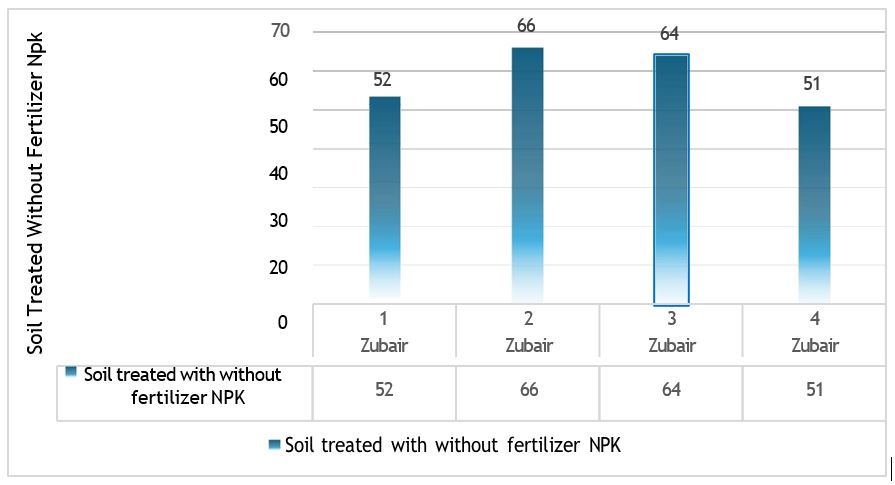
This study aimed to assess the extent of petroleum hydrocarbon contamination in soils from the Zubair oil field and evaluate the efficacy of mangrove-mediated bioremediation. Soil samples were collected from four distinct locations within the field, designated Zubair1, Zubair2, Zubair3, and Zubair4. Two experimental conditions were established for each location: soils amended with NPK fertilizer and unamended control soils according to the fertilizer recommendation. Mangrove seeds were sown in all treatments and cultivated for a period of six months. Following the growth period, 100 g of soil from each treatment was subjected to solvent extraction to quantify the residual hydrocarbon concentration and determine the percentage of biodegradation. The results demonstrated statistically significant differences in biodegradation efficiency between fertilized and non-fertilized soils. The highest biodegradation rate, 77%, was observed in the fertilized soil from Zubair2. Conversely, the lowest rate, 51%, occurred in the unfertilized soil from Zubair4. These findings indicate that NPK fertilization enhances the bioremediation potential of mangroves in petroleum-contaminated soils, with Zubair2 exhibiting the greatest remediation capacity.
Metrics
References
Afzal, M.; Afzal, S.; Khan, S.; Iqbal, M.S. and Mirza, Q.M. (2013). KhanInoculation method affects colonization and activity of Burkholderia phytofirmans PsJN during phytoremediation of diesel-contaminated soil Int. Biodeter.Biodegr., 85 , 331-336, 10.1016/j.ibiod.2013.08.022
Afzal, M.; Afzal, S.; Yousof, T.G.R.; eichenauer, M. and Kuffiner, A. (2011). Soil type affects plant colonization, activity and catabolic gene expression of inoculated bacterial strains during phytoremediation of diesel. J. Hazard. Mater., 186: 15681575, 10.1016/j.jhazmat.2010.12.040
Aragaw, T. A. (2021). Functions of various bacteria for specific pollutants degradation and their application in wastewater treatment: a review. Int. J. Environ. Sci. Technol. 18, 2063–2076. Doi:10.1007/s13762-020-03022-2
Bala, S.; Garg, D.; Thirumalesh, B.V.; Sharma, M.; Sridhar, K. and Inbaraj, B.S., (2022). Recent strategies for bioremediation of emerging pollutants: a review for a green and sustainable environment. Toxics 10, 484. doi:10.3390/toxics10080484
Chaudhary, D. K., and Kim, J. (2019). New insights into bioremediation strategies for oil-contaminated soil in cold environments. Int. Biodeterior. Biodegrad. 142, 58–72. doi:10. 1016/j.ibiod.2019.05.001
Correa -García, S.; Pande, P.; Séguin, A.; St-Arnaud, M., and Yergeau, E. (2018). Rhizoremediation of petroleum hydrocarbons: a model system for plant microbiome manipulation. Micro Biotechnol 11:819–832 DOI 10.1111/1751-7915.13303.
Das, N. and Chandran, P. (2011). Microbial Degradation of Petroleum Hydrocarbon Contami-nants: An Overview SAGE-Hindawi Access to Research Biotechnology. Research In-ternational. Volume 2011, Article ID 941810, 13 pages. Doi:10.4061/2011/941810.
Deng, Y.; Li, W.; Sun, Z.; Liu, Q.; Wang, J. and Zhao T. (2025). Innovative microbial activators for enhanced bioremediation of oil-contaminated soils: mechanistic insights. World J. Micro Biotechnol 41(2):47 DOI 10.1007/s11274-025-04258-1.
EPA,(EUA).(2008) .“Design Document for Passive Bioventing. How to Evaluate Alternative Cleanup Technologies for Underground Storage Tank Sites: A Guide for Corrective Action Plan Reviewers, 2006 (EPA 510-B-94-003; EPA 510-B-95-007; and EPA 510-R-04-002).
Fritsche, W. and Hofrichter, M. (2008).Aerobic Degradation by Microorganisms. in Bio-technology Set, Second Edition (eds H.-J. Rehm and G. Reed), Wiley-VCH Verlag GmbH, Weinheim, Germany. doi: 10.1002/9783527620999.ch6m
Goutx, M. and Saliot, A. (1980). Relationship between dissololved and particulate fatty acids and hydrocarbons, chlorophyll a, and zooplankton biomass in Villefrench bay, Medit. Sea.Mar. Chem.,8:299-318.
Guo, J.H.; Liu, Z.J. and Zhang, Y. (2010) Significant acidification in major Chinese croplands. Science, 32 7: 1008-1010.
Hamilton, S.E., and Friess, D.A. (2018). Global carbon stocks and potential emissions due to mangrove deforestation from 2000 to 2012. Nat. Clim. Chang. 8, 240–244. doi: 10.1038/s41558-018-0090-4
Hoang, S.A.; Lamb, D.; Seshadri, B.; Sarkar, B.; Choppala, G.; Kirkham, M.B. and Bolan, N.S. (2021). Rhizoremediation as a green technology for the remediation of petroleum hydrocarboncontaminated soils. J. Hazardous Materials, 401:123282 DOI 10.1016/j.jhazmat.2020.123282.
Huang, Y.; Pan, H.; Wang, Q.; Ge, Y.; Liu, W., and Christie, P. (2019). Enrichment of the soil microbial community in the bioremediation of a petroleum-contaminated soil amended with rice straw or sawdust. Chemosphere 224, 265–271. doi:10.1016/j. chemosphere.2019.02.148
Huang, Y., Pan, H., Wang, Q., Ge, Y., Liu, W., and Christie, P. (2019). Enrichment of the soil microbial community in the bioremediation of a petroleum-contaminated soil amended with rice straw or sawdust. Chemosphere 224, 265–271. doi:10.1016/j. chemosphere.2019.02.148
Khan, S.; Khan, M.; Afzal, S.; Iqbal, Q. and Khan, M. (2013).Plant–bacteria partnerships for the remediation of hydrocarbon contaminated soils Chemosphere, 1317-1332, 10.1016/j.chemosphere.2012.09.045
Liu, H.; Tan, X.; Guo, J.; Liang, X.; Xie, Q. and Chen, S. (2020). Bioremediation of oil-contaminated soil by combination of soil conditioner and microorganism. Journal of Soils and Sediments 20(4):2121–2129 DOI 10.1007/s11368-020-02591-6
Pritchard, P.H. and Costa, C.F. (1991).“EPA’s Alaska Oil Spill Bioremediation Project,” Envir Sci & Tech, 25 (3): 372-379. doi:10.1021/es00015a002
Pramila, R.; Padmavathy, K.; Ramesh, K.V. and Mahalakshmi, K. (2012).Brevibacillus parabrevis, Acinetobacter baumannii and Pseudomonas citronellolis - Potential candidates for biode- gradation of low density polyethylene (LDPE). J. Bacteriology Research, 4(1): 9-14.
Roy, A.; Dutta, A.; Pal, S.; Gupta, A.; Sarkar, J. and Chatterjee, A. (2018). Biostimulation and bioaugmentation of native microbial community accelerated bioremediation of oil refinery sludge. Bioresour. Technol. 253, 22–32. Doi:10.1016/j. biortech.2018.01.004.
Santos, H.F.; Carmo, F.L.; Paes, J.E.S.; Rosado, A.S., and Peixoto, R.S. (2011). Bioremediation of mangroves impacted by petroleum. Water Air Soil Pollut. 216, 329–350. doi: 10.1007/s11270-010-0536-4
Sayara, T., and Sánchez, A. (2020). Bioremediation of PAH-contaminated soils: process enhancement through composting/compost. Appl. Sci. 10, 3684. Doi:10.3390/ app10113684.
Singha, L.P., and Pandey, P. (2021). Rhizosphere assisted bioengineering approaches for the mitigation of petroleum hydrocarbons contamination in soil. Critical Reviews in Biotechnology 41:749–766 DOI 10.1080/07388551.2021.1888066
Singha, L.P., and Pandey, P. (2021). Rhizosphere assisted bioengineering approaches for the mitigation of petroleum hydrocarbons contamination in soil. Crit. Rev. Biotechnol. 41, 749–766. doi:10.1080/07388551.2021.1888066
SPSS (2021). IBM SPSS Statistics for Windows, Version 27.0. [computer Software]. Armonk, NY: IBM Corp.
Tsai, W.H.; Chen, T.W.; Liu, Y.H.; Shen, S.M.; Chen, C.S., and Tien, C.J. (2025). A field-scale assessment of the efficacy of bioremediation of petroleum hydrocarbon-contaminated soils using two biostimulants. Int. Biodeterior Biodegrad 196:105942 DOI 10.1016/j.ibiod.2024.105942.
Wu, M.L.; Zhang, X.H.; Wu, J.L.; Ye, X.Q., and Lin, X.F. (2016). Bioaugmentation and biostimulation of hydrocarbon degradation and the microbial community in a petroleum-contaminated soil. Int. Biodeterior Biodegrad 107(16): 158–164 DOI 10.1016/j.ibiod.2015.11.019
Downloads
Published
How to Cite
Issue
Section
License
Copyright (c) 2026 Iraqi Journal of Aquaculture

This work is licensed under a Creative Commons Attribution 4.0 International License.