Fish food security in Basrah governorate, Iraq: An assessment of fish availability and per capita supply in 2024
Keywords:
Food security, Per capita share, Seasonal variation, Basrah Governorate, IraqAbstract
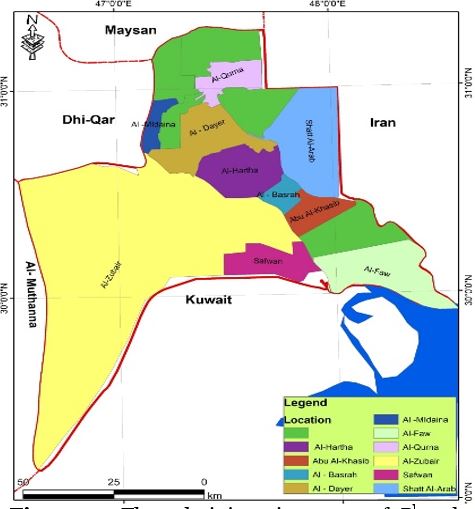
Fish food security is an essential component of overall food security as fish represent a rich source of healthy and high-quality animal protein. The current study was designed to assess the contribution of fishery resources to support the food security in Basrah Governorate. Monthly data on fish quantities available in markets were collected across 10 districts in Basrah throughout 2024 alongside official census data. The study employed both destructive and inferential statistical analysis including per capita calculations, coefficient or variation, temporal trend analysis, and seasonal variations. Total annual fish quantity available in the markets reached 45,519 tons for a population of 3,388,398 resulting in an average annual per capita consumption of 13.43 kg. The findings revealed substantial spatial disparities across districts, ranging from 9.00-31.07 kg/capita/year with a spatial coefficient of variation of 53.7% pronounced seasonal fluctuation.
Metrics
References
Ahmed, A. R. (2022). Overview of fish farming using floating cages along the Shatt al-Arab River in Basrah Province, Southern Iraq. Mediterranean Fisheries and Aquaculture Research, 5(1), 1–10. https://doi.org/10.1022094/medfar.v5i71060
Al-Hilali, H. (2025). Status, challenges, and prospects of aquaculture development in Iraq. Iraqi Journal of Aquaculture, 22(1), 111–139. https://doi.org/10.58629/ijaq.v22i1.700
Ali, T. S., & Abahussain, A. A. (2013). Status of commercial fisheries in the Kingdom of Bahrain. Basrah Journal of Agricultural Sciences, 26(1).
Brown, R. S., Hubert, W. A., & Daly, S. F. (2011). A primer on winter, ice, and fish: What fisheries biologists should know about winter ice processes and stream-dwelling fish. Fisheries, 36(1), 8–26. https://doi.org/10.1577/03632415.2011.10389052
Dusaeva, E. M., Kurmanova, A. H., & Pavlova, A. O. (2024). Increase in per capita consumption of fish products with sustainable development of the fisheries complex of Russia. Russian Journal of Management, 12(4), 260–276. https://doi.org/10.29039/2500-1469-2024-12-4-260-276
Food and Agriculture Organization of the United Nations. (1996). Rome declaration on world food security and world food summit plan of action. FAO.
Food and Agriculture Organization of the United Nations. (2014). The state of world fisheries and aquaculture 2014. FAO. https://openknowledge.fao.org/server/api/core/bitstreams/c569598a-eafd-4a87-aa6a-f54f886d1a5f/content
Food and Agriculture Organization of the United Nations. (2017). The state of food security and nutrition in the world 2017: Building resilience for peace and food security. FAO. https://openknowledge.fao.org/server/api/core/bitstreams/5bc8dad9-a192-439f-827b-354acc9653de/content
Food and Agriculture Organization of the United Nations. (2021). The state of food and agriculture 2021: Making agrifood systems more resilient to shocks and stresses. FAO.
Food and Agriculture Organization of the United Nations. (2022). The state of world fisheries and aquaculture 2022: Towards blue transformation. FAO. https://doi.org/10.4060/cc0461en
Food and Agriculture Organization of the United Nations. (2024). The state of world fisheries and aquaculture 2024: In brief. https://www.fao.org/newsroom/detail/fao-report-global-fisheries-and-aquaculture-production-reaches-a-new-record-high/en
Merino, G., Barange, M., Blanchard, J. L., Harle, J., Holmes, R., Allen, I., Allison, E. H., Badjeck, M.-C., Dulvy, N. K., Holt, J., Jennings, S., Mullon, C., & Rodwell, L. D. (2012). Can marine fisheries and aquaculture meet fish demand from a growing human population in a changing climate? Global Environmental Change, 22, 795–806. https://doi.org/10.1016/j.gloenvcha.2012.03.003
Mohamed, A.-R. M., & Abood, A. N. (2023). Evaluation of the inland fisheries in Basrah Province during 2020–2021, Iraq. Asian Journal of Applied Research for Community Development and Empowerment, 7(2). https://doi.org/10.29165/ajarcde.v7i2.255
Obeed, AA (2025). Evaluation of physicochemical properties of some imported frozen fish species from Basrah markets, Iraq. Egyptian Journal of Aquatic Biology and Fisheries, 29(1), 797–818. https://doi.org/10.21608/ejabf.2025.406535
Pratama, G. B., Aisyah, A., & Muhyun, A. A. (2025). Impact of oceanographic variability on chlorophyll-a concentration and sea surface temperature in North Maluku waters and its influence on fish abundance. Asian Journal of Fisheries and Aquatic Research, 27(2), 13–20. https://doi.org/10.9734/ajfar/2025/v27i2876
Rice, J., & Garcia, S. M. (2011). Fisheries, food security, climate change, and biodiversity: Characteristics of the sector and perspectives on emerging issues. ICES Journal of Marine Science, 68(6), 1343–1353. https://doi.org/10.1093/icesjms/fsr041
Sachdeva, L., Chhabda, P. K., Tandon, C., & Sardana, S. (2024). Analyzing the economic benefits of sustainable fisheries management. International Journal of Advanced Research in Engineering and Science, 4(S1), 101–106. https://doi.org/10.70102/ijares/v4s1/17
Shi, Y., Han, Q., Zhang, S., Yang, S., Cheng, T., Fan, W., Zhao, G., Han, H., & Zhang, H. (2024). Seasonal spatio-temporal model improves refined stock assessment and management of Japanese sardine (Sardinops melanostictus) in the Northwest Pacific Ocean. Animals, 14(23), 3434. https://doi.org/10.3390/ani14233434
Tacon, A. G. J., & Shumway, S. E. (2024). Critical need to increase aquatic food production and food supply from aquaculture and capture fisheries: Trends and outlook. https://doi.org/10.1080/23308249.2024.2324321
Whitney, F. A. (2015). Anomalous winter winds decrease 2014 transition zone productivity in the NE Pacific. Geophysical Research Letters, 42(2), 428–431. https://doi.org/10.1002/2014GL062634
Yáñez, E., Lagos, N. A., Norambuena, R., Silva, C., Letelier, J., Muck, K.-P., San Martin, G., Benítez, S., Broitman, B. R., Contreras, H., Duarte, C., Gelcich, S., Labra, F. A., Lardies, M. A., & Böhm, G. (2017). Impacts of climate change on marine fisheries and aquaculture in Chile (pp. 239–332). John Wiley & Sons. https://doi.org/10.1002/9781119154051.ch10
Younis, K. H., Jabir, A. A., Al-Nagar, G. A., Malallah, S., Al-Faiz, N. A., Al-Shamary, A. Ch., & Abd-Al-Rasoul, T. H. (2023). The average per capita consumption of fish in Basrah Governorate, Iraq, from the period 2016–2018. Marsh Bulletin, 18(1), 71–82.
Downloads
Published
How to Cite
Issue
Section
License
Copyright (c) 2026 Iraqi Journal of Aquaculture

This work is licensed under a Creative Commons Attribution 4.0 International License.